GetYourGuide2D1N
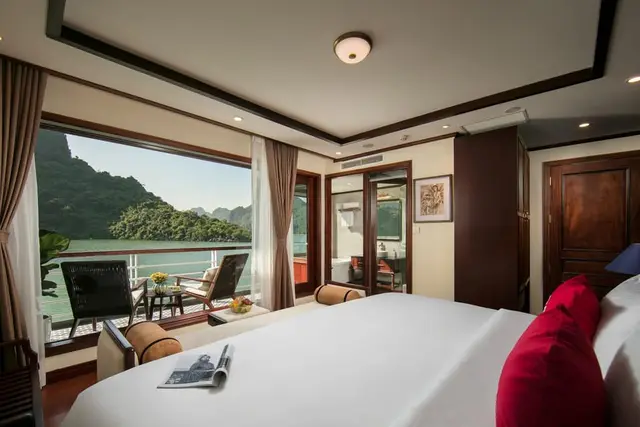
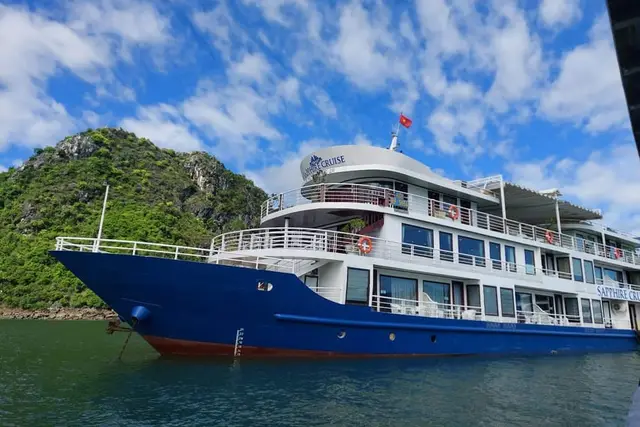
Hanoi: 2 Days Ha Long, Lan Ha Bay 5-Star Cruise with Balcony
4.8 (6,140)
from $126Check dates
PlanPlanning · weather and seasons
The best time to visit Lan Ha Bay is October and November: the driest, sunniest stretch of the year with the sea still warm enough to swim. December and January are dry but cool, February to April is grey and misty, and May to September is hot, wet and the time when storms stop the boats.
Updated October 16, 2026Facts checked against official sourcesContains affiliate links
9 options · Prices checked on October 16, 2026
Nothing with those filters.
GetYourGuide2D1N
4.8 (6,140)
from $126Check dates
GetYourGuide2D1N
4.7 (5,234)
from $146Check dates
Klook2D1N
4.8 (939) · 4K+ booked
from $104Check dates
GetYourGuide3D2N
4.8 (2,115)
from $225Check dates
GetYourGuideDay trip
4.8 (1,672)
from $28Check dates
GetYourGuide3D2N
4.8 (1,534)
from $338Check dates
Klook2D1N
4.9 (824) · 6K+ booked
from $146Check dates
GetYourGuide3D2N
4.8 (1,483)
from $220Check dates
GetYourGuide2D1N
4.8 (1,193)
from $110Check dates
The best time to visit Lan Ha Bay is October to November. Rain drops sharply after September, the sun is out for 150–180 hours a month, and the sea is still 25–28 °C. If you can only travel at another time, the bay still works all year: what changes is the light, the water temperature and the chance that a storm cancels your cruise.
The numbers below come from the long-term normals of the Phu Lien weather station in Hai Phong, the nearest station with a long record, and a 10-year sea-temperature average for Cat Ba. Lan Ha (vịnh Lan Hạ, the bay east of Cat Ba Island) is on the same stretch of coast, so the pattern is the same.
| Jan | Feb | Mar | Apr | May | Jun | Jul | Aug | Sep | Oct | Nov | Dec | |
|---|---|---|---|---|---|---|---|---|---|---|---|---|
| High °C | 20 | 20 | 22 | 26 | 31 | 32 | 32 | 32 | 31 | 29 | 26 | 22 |
| Low °C | 14 | 15 | 18 | 21 | 24 | 26 | 26 | 25 | 24 | 22 | 19 | 16 |
| Sea °C | 20 | 19 | 21 | 24 | 28 | 30 | 30 | 30 | 30 | 28 | 25 | 22 |
| Rain mm | 28 | 27 | 49 | 85 | 202 | 238 | 238 | 353 | 257 | 136 | 43 | 23 |
| Rainy days | 8 | 13 | 17 | 13 | 13 | 14 | 14 | 18 | 14 | 10 | 6 | 6 |
Source: Air temperature and rain: Phu Lien station, Hai Phong (Vietnam Institute for Building Science and Technology long-term normals, via Wikipedia 'Haiphong'). Sea temperature: Cat Ba 10-year average, seatemperature.info.
| Month | High / low °C | Rain | Sun hours | Sea °C |
|---|---|---|---|---|
| January | 19.8 / 14.2 | 28 mm | 82 | 19.6 |
| February | 20.1 / 15.2 | 27 mm | 47 | 19.2 |
| March | 22.2 / 17.7 | 49 mm | 41 | 20.9 |
| April | 26.4 / 21.1 | 85 mm | 85 | 24.0 |
| May | 30.6 / 24.1 | 202 mm | 184 | 27.8 |
| June | 32.0 / 25.6 | 238 mm | 181 | 30.0 |
| July | 32.1 / 25.9 | 238 mm | 199 | 30.3 |
| August | 31.5 / 25.3 | 353 mm | 170 | 30.3 |
| September | 30.8 / 24.3 | 257 mm | 179 | 29.8 |
| October | 29.0 / 22.0 | 136 mm | 180 | 28.0 |
| November | 25.8 / 18.8 | 43 mm | 149 | 25.2 |
| December | 22.1 / 15.5 | 23 mm | 127 | 21.9 |
What the table shows that brochures skip: March has 17 rain days but only 49 mm of rain. That is drizzle (mưa phùn) and low cloud, not downpours, with humidity around 90%. February and March have the least sunshine of the year, 41–47 hours a month.
| Jan | Feb | Mar | Apr | May | Jun | Jul | Aug | Sep | Oct | Nov | Dec | |
|---|---|---|---|---|---|---|---|---|---|---|---|---|
| Cruise weather overall | Good | Poor | Poor | Good | Good | Poor | Poor | Poor | Poor | Best | Best | Good |
| Clear views and photos | Poor | 0 | 0 | Poor | Good | Good | Best | Good | Good | Best | Good | Good |
| Swimming | 0 | 0 | 0 | Poor | Good | Best | Best | Best | Best | Best | Good | Poor |
| Plankton nights | 0 | 0 | 0 | Poor | Good | Good | Good | Good | Good | Good | 0 | 0 |
| Deep-water solo climbing | 0 | 0 | Poor | Good | Good | Good | Good | Good | Best | Best | Best | Poor |
| Hiking in the national park | Best | Good | Good | Good | Poor | Poor | Poor | Poor | Poor | Good | Best | Best |
| Fewer domestic crowds | Good | Poor | Best | Good | Poor | Poor | Poor | Good | Good | Best | Best | Best |
PoorGoodBest
These are the driest sunny months: October gets 136 mm of rain and 180 hours of sun, November 43 mm and 149 hours. The sea is 28 °C in October and 25 °C in November, so swim stops still feel good. Storm season officially runs until November, so flexible booking still makes sense. This is the time for a 3-day cruise if you can afford the extra night: more daylight hours on the water pay off when the sky is clear.
Rain is minimal (23 mm in December, 28 mm in January), but daytime highs are around 20–22 °C and nights drop to 14–16 °C. The sea is about 20 °C, so few people swim. Sundecks are chilly in the evening; bring a warm layer. In exchange you share the bay with fewer domestic travelers. Christmas Eve and New Year's Eve carry gala-dinner surcharges on many ships, often USD 40–60 per person.
This is the grey season. Expect karst islands fading into mist rather than blue-sky photos, and fine drizzle on many days. Sea mist is beautiful in its own way, but if your trip is about swimming or sharp views, avoid February and March. April warms up (26 °C highs, sea 24 °C) and is a reasonable shoulder month.
Every month from May to September gets more than 200 mm of rain, and August is the wettest at 353 mm. The sea is at its warmest, around 30 °C from June to August. This is also the Vietnamese holiday season and the period when storms cancel sailings. Book flexible, and read the next section.
The storm season for northern Vietnam is June to November, according to the national disaster agency; some operators flag May to July as their most affected months. When a storm approaches, the authorities stop the boats, not the cruise line: in Quang Ninh (Ha Long side) the Inland Waterway Port Authority stops issuing departure permits, and Hai Phong issues a sea ban (cấm biển) and stops the Cat Ba ferries.
Two recent examples show what that means in practice:
There is no state refund rule. Refunds follow the operator's or platform's terms. A typical operator rule is a 100% refund if the cruise is cancelled before sailing, and payment only for services used if it is cut short; some ships also convert a cancelled overnight into a day trip. On GetYourGuide most cruise listings allow free cancellation up to 24 hours before the start, which is the safest way to book in storm season. Our how to book guide compares the platforms with direct terms.
Cruises that check in at Tuan Chau in Ha Long avoid the Cat Ba ferry entirely, which matters when the ferry is the bottleneck. A storm that stops the ships stops them on both sides, though.
There are no official visitor counts comparing months, but Vietnamese holidays are easy to spot on the water and at the ferry:
International visitors are more common from October to April. If you want quiet water and an easy ferry, aim for October, November or March on weekdays.
Swim stops are part of most cruises from May to October, when the sea is 28–30 °C. November is still fine for most people at 25 °C. From December to March the water is 19–21 °C.
The glow appears in the warm months, roughly May to October, on dark, moonless, calm nights. It is never guaranteed: a bright moon, town lights and squid-boat lamps all wash it out. Plan around the new moon:
| Best window | New moon | Full moon (weakest) |
|---|---|---|
| Nov 7 – Nov 13 | Nov 10 | Nov 24 |
| Dec 6 – Dec 12 | Dec 9 | Dec 24 |
| Jan 5 – Jan 11 | Jan 8 | Jan 23 |
| Feb 3 – Feb 9 | Feb 6 | Feb 21 |
| Mar 5 – Mar 11 | Mar 8 | Mar 23 |
| Apr 3 – Apr 9 | Apr 6 | Apr 21 |
| May 3 – May 9 | May 6 | May 21 |
| Jun 1 – Jun 7 | Jun 4 | Jun 19 |
| Jul 1 – Jul 7 | Jul 4 | Jul 19 |
| Jul 30 – Aug 5 | Aug 2 | Aug 17 |
| Aug 29 – Sep 4 | Sep 1 | Sep 16 |
| Sep 28 – Oct 4 | Oct 1 | Oct 15 |
| Oct 27 – Nov 2 | Oct 30 | Nov 14 |
| Nov 26 – Dec 2 | Nov 29 | Dec 13 |
The glow shows best on moonless, calm nights; it is never guaranteed. Dates in Vietnam time.
Every plankton outing relies on night kayaking or swimming, so the kayak suspension below applies. Details in our plankton guide.
Season is not the main question here. Kayaking in the Cat Ba bays has been under an official suspension since November 2024, re-confirmed in late 2025 (VnExpress). Some ships offer it only in a designated area or replace it with a bamboo boat, tender or swim. Ask the operator in writing. See kayaking in Lan Ha.
Deep-water solo needs a high tide, and Lan Ha has only one high tide a day, with a range of up to 3 m. The best tides fall from June to November; April–May and September–November are the best compromise between tides and weather. Winter suits sport climbing on land better. More in rock climbing.
The forest trails to Ngu Lam peak are hot and humid from May to September. December to March is more comfortable, and October–November combines dry trails with clear views. The park is open 07:00–17:00 (park ticket page). See Cat Ba National Park.
The season changes more than the weather:
GetYourGuide2D1N
4.9 (2,817)
from $125Check dates
Klook2D1N
4.9 (824) · 6K+ booked
from $146Check dates
GetYourGuide3D2N
4.8 (1,483)
from $220Check dates
GetYourGuide2D1N
4.8 (1,193)
from $110Check dates
GetYourGuide2D1N
4.7 (1,231)
from $131Check dates
Klook2D1N
5.0 (449) · 2K+ booked
from $176Check dates
See everything on GetYourGuide →See everything on Klook →Prices checked on October 16, 2026
October or November. They are the driest sunny months, with 136 mm and 43 mm of rain and a sea of 28 °C and 25 °C.
Yes, if you accept cool weather. December and January are dry, with highs around 20–22 °C and lows of 14–16 °C, but the sea is about 20 °C, so swimming is for the brave.
June to November, according to the national disaster agency. In 2026 storms stopped the Cat Ba ferries on 22 August and 13–14 September. Keep a buffer day before flights.
If the port authorities stop departures, yes, on every ship. Refunds follow the operator's or platform's terms; a full refund before sailing is the usual operator rule.
February to April is the misty, drizzly season. February and March have the lowest sunshine of the year, 41–47 hours a month.
In the warm months, roughly May to October, on dark, moonless and calm nights. It is never guaranteed.
Booking calendars Our pages show live calendars from GetYourGuide, which may set cookies. You can load them automatically or only when you click. Cookie policy